
Blog
How to wear lace-up boots: outfits for the city, work and the weekend

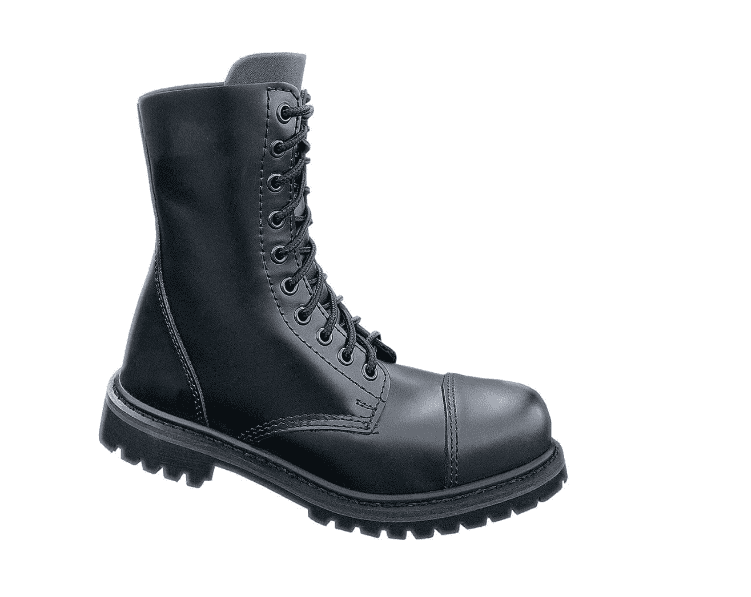
How to wear lace-up boots is a question we hear in the shop almost every day, both from people buying them for the first time and from those who've had them for years. Lace-up boots seem simple, but the boot height, trouser cut and jacket change the whole look.
In this article we explain how many eyelets suit you, how to get your trouser legs to sit right, which jackets and layers work with combat boots and how to look after them through the winter. At the end you'll find tips on sizing and breaking them in, as that's where people most often go wrong.
Where combat boots come from: from work and military boot to street icon
The leather boot with eyelets and a thick sole started out as work and military footwear. It had to survive a long day on your feet, mud and cold, and lace tightly around the ankle.
Over time they were adopted by people with no connection to fieldwork or the army, above all music and street subcultures. That is how a boot made for work became part of city style, while keeping what it was made for: tough leather, a stable sole and a simple shape.
That's why combat boots still look best with clothing of similar origins. If you're interested in the wider context, we wrote about it in the article on military style.
10, 14 or 20 eyelets: which boot height to choose
The number of eyelets tells you how tall the boot is. The more eyelets, the higher the shaft goes up the leg, but putting them on and lacing them up also takes longer.
- 10 eyelets covers the ankle and the start of the lower leg. This is the easiest height for everyday wear and goes with the most types of trousers.
- 14 eyelets goes noticeably higher up the calf. Boots like these look more striking and need a bit more attention around the trouser legs.
- 20 eyelets reaches almost to the knee. It's a boot that gets noticed and that you build the rest of your outfit around.
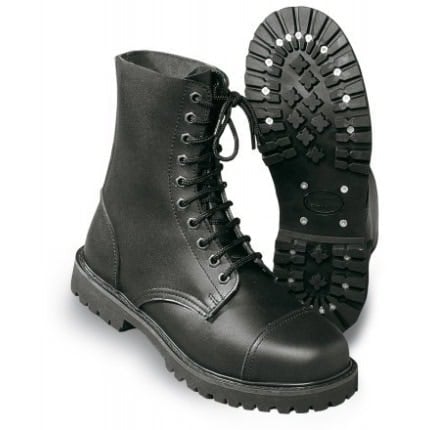
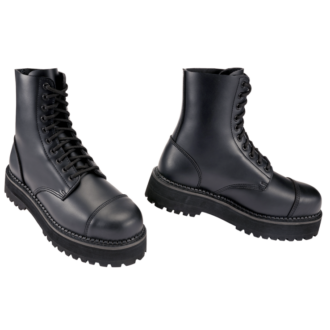
If you're buying your first combat boots, start with 10 eyelets. Brandit Phantom with 10 eyelets are made of sturdy leather, with metal reinforcement at the front and a slightly narrower cut, so they look neat on the feet. They're suitable for autumn and winter, for everyday wear, gigs and easy walks out of town.
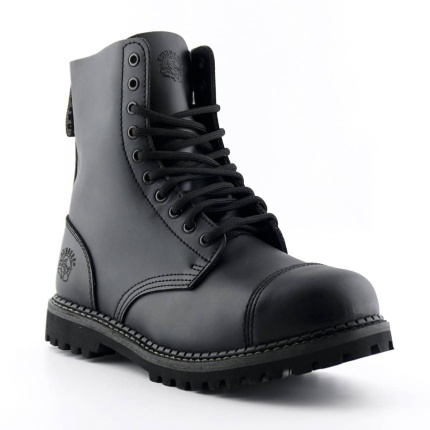
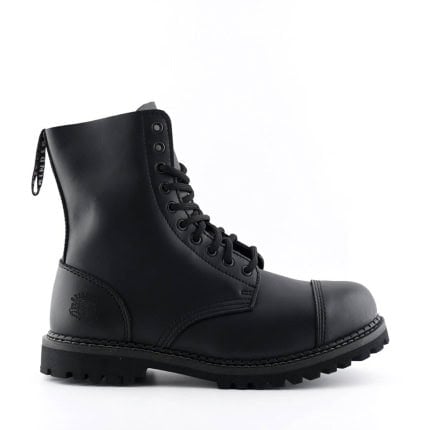
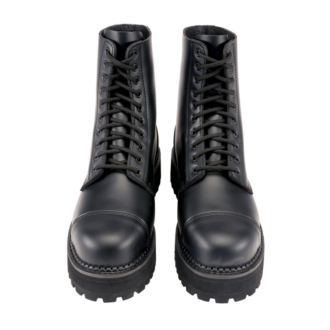
If you like the classic British look, take a look at Grinders Stag CS with 10 eyelets, made from quality leather with a stable sole. If you want the same height but with a platform sole, there are the Brandit Plateau Phantom, made of genuine leather, with a steel toe cap and a rubber platform sole with tread.
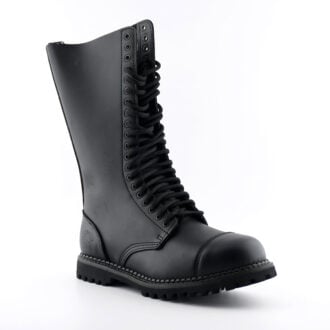
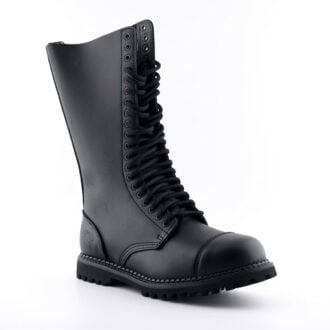
If you're looking for the tallest version, Grinders King CS with 20 eyelets are high leather boots with a steel toe cap and a Goodyear Welted commando sole. Find other models and heights in the category boots.
Lace-up boots and trousers: cargo, jeans, slim or wide legs
Lace-up boots are chunky at the bottom, so trousers need enough "weight" not to look separate from the boot. Thin fabric and overly narrow legs with a thick sole often look mismatched.
Cargo Trousers are the most natural combination because they share the same origins. A straight or slightly tapered cut falls nicely over a 10-eyelet boot, and a slimmer model tucks easily into a taller boot. Read more about cuts in our article on men's cargo trousers.
Jeans go with any height. Darker, straight jeans look smarter, while lighter, worn ones add a street feel.
Skinny legs are almost always tucked in or rolled up. Wide worn over the boot, so only the toe and sole show. See the trouser selection in the category trousers.
Tucked in, rolled up or over: how to get your trouser legs to sit right
There are three basic ways, and each gives a different look.
- Tucked into the boot: best for skinny trousers and boots with 14 or 20 eyelets. Pull the trouser leg down before lacing up so it doesn't bunch above the boot.
- Rolled up: one or two narrow turns, so the hem sits just above the top eyelet. This looks best with jeans and 10-eyelet boots.
- Over the boot: for straight and wider legs. The trouser leg should touch the top of the boot with a slight break, not drag on the ground.
A rule that always applies: neither socks nor skin should show between the boot and the trouser leg, unless you want that on purpose with shorts or a skirt.
Lace-up boots with an MA-1 flight jacket, N-3B parka and wool jumper
The top half should match the weight of the boot. Short, sturdy jackets lengthen the leg and show off the boots, while longer jackets frame them.
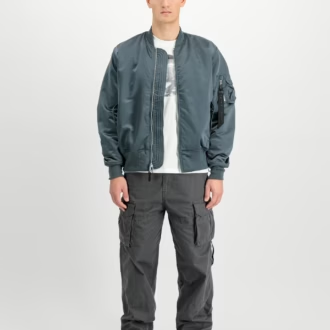
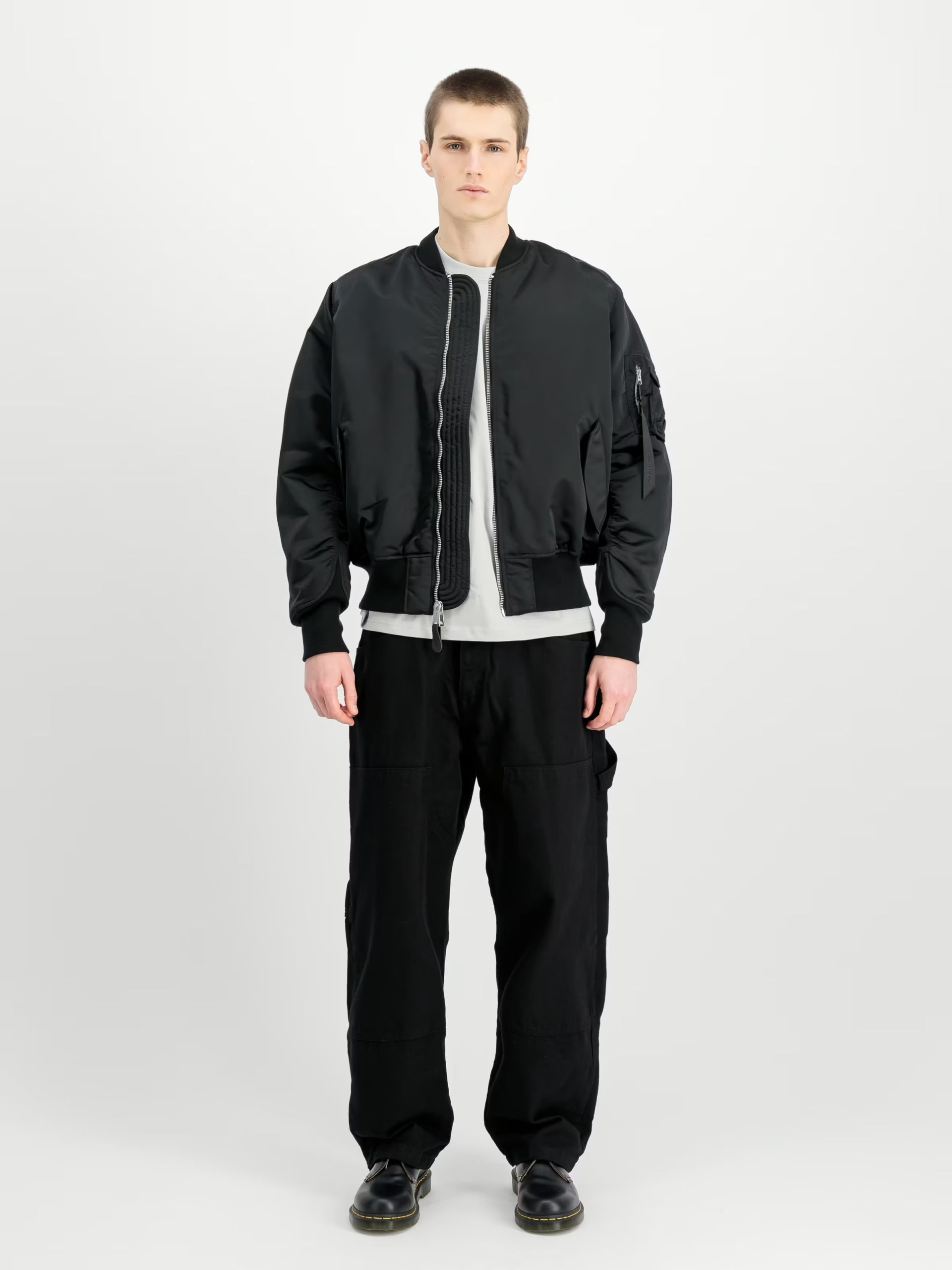
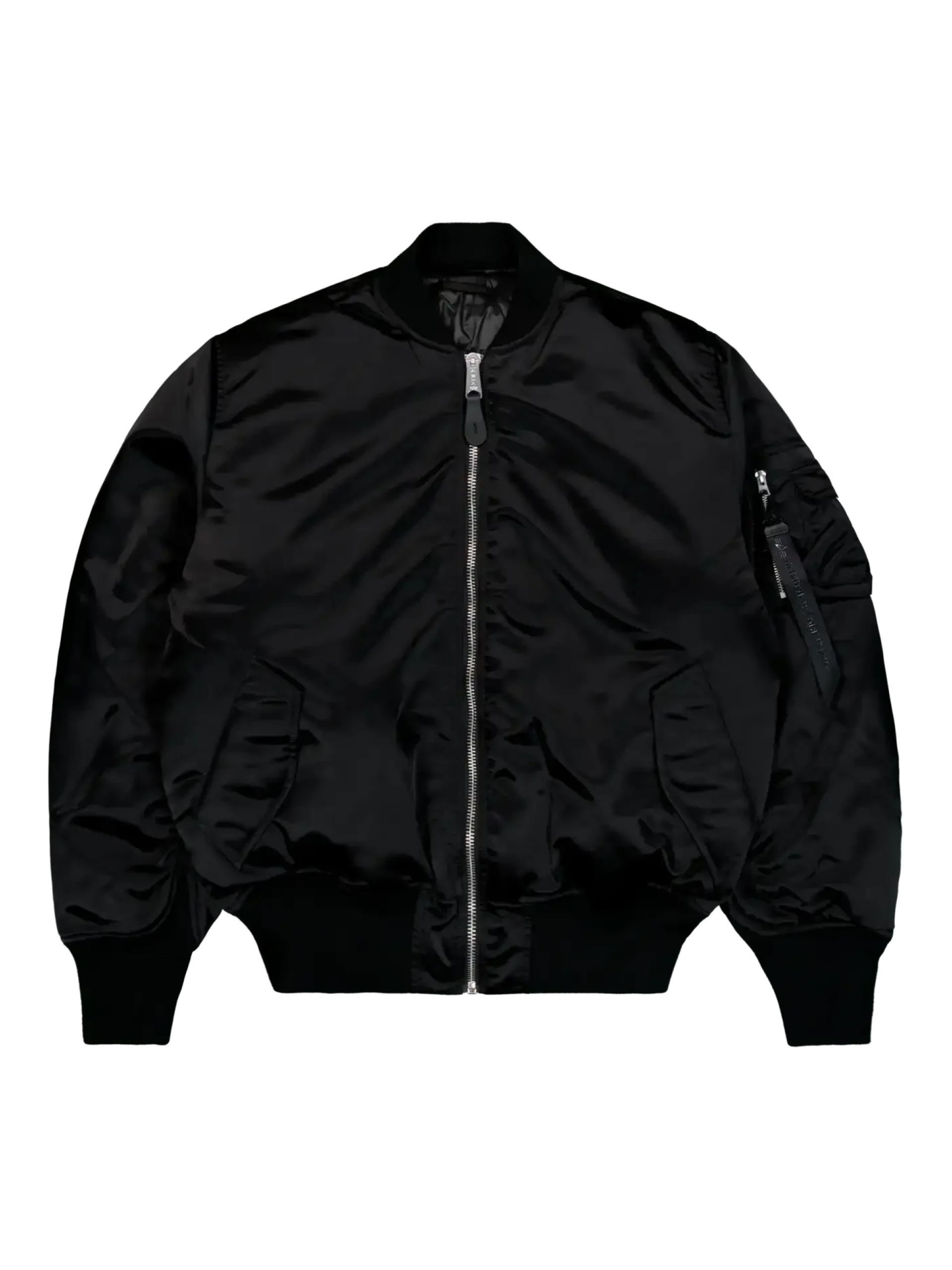
Alpha Industries MA-1 flight jacket is one of the most common pairings with combat boots. It has a nylon shell, 200 g/m² Thinsulate insulation and a regular fit, and it is reversible, so you can wear it either way out. It suits the city and lighter outdoor activities in autumn and winter. Read more about it in our article on the MA-1 flight jacket.
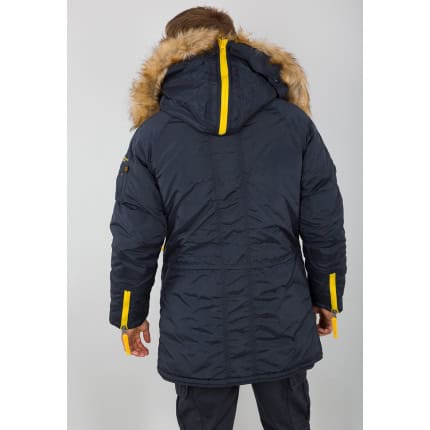
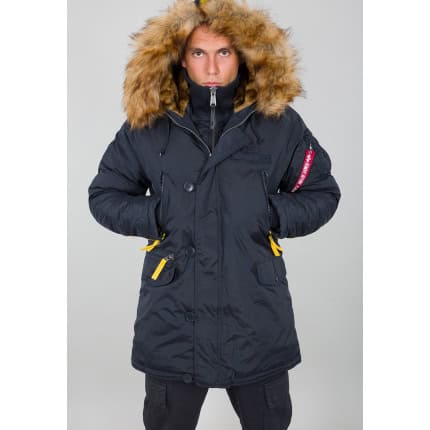
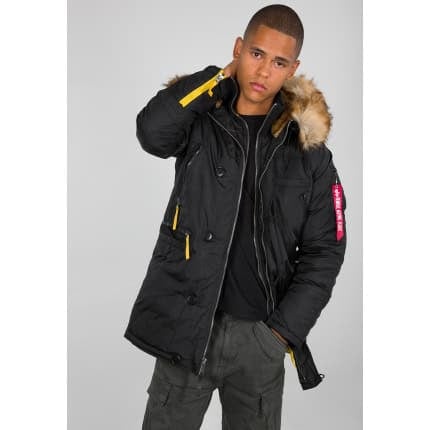
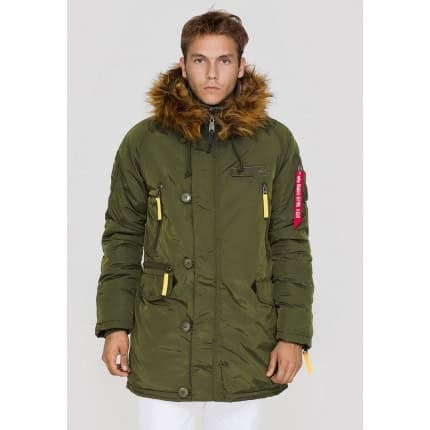
When a real frost sets in, Alpha Industries N3B polar parka is the safer choice. It's water-repellent and windproof, with a nylon outer and polyester filling, and has a lined hood with detachable fur and a high collar. A longer parka with slim trousers and tall lace-up boots creates a balanced silhouette.
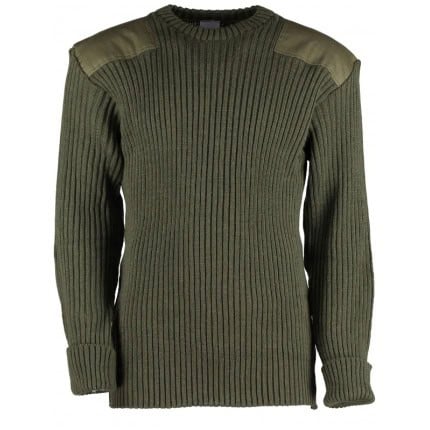
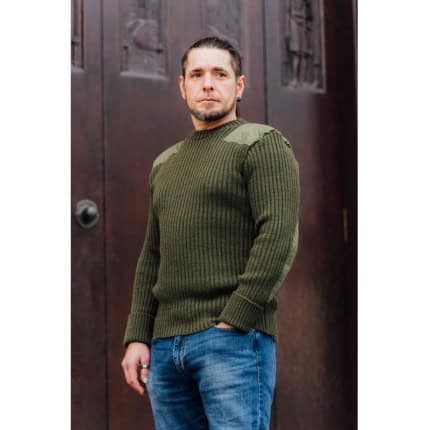
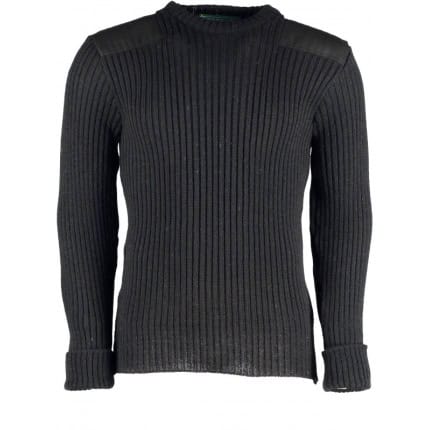
Under the jacket, Wooly Pooly 100% wool jumper has a classic cut with a ribbed collar, cuffs and hem. It is designed for cold days and layering, so it works easily as a mid layer under a jacket.
Outfits for the city, work and the weekend
City
Jeans turned up above 10-eyelet boots, a plain T-shirt or jumper and an MA-1 flight jacket. It's a combination that works from autumn to late winter and doesn't need much thought.
Work
If your workplace has no strict dress code, lace-up boots work with dark straight trousers and a wool jumper. Stick to black or dark brown 10-eyelet boots, well cleaned, and let the trouser leg fall over the shaft. In workplaces where toe protection is needed, steel toe cap models have a practical side too.
Weekend
Cargo trousers, tucked in or rolled up, taller boots and a parka for longer time outdoors. For walks outside the city, lace-up boots with a stable sole are quite enough, just watch out for wet grass and mud and clean them afterwards.
Lacing and caring for leather in winter
There are two common methods: straight lacing, where the lace runs horizontally between the eyelets, and classic criss-cross. Straight looks neater, while criss-cross is easier to tighten further. You can leave the top two or three eyelets a little looser so your ankle can bend more freely.
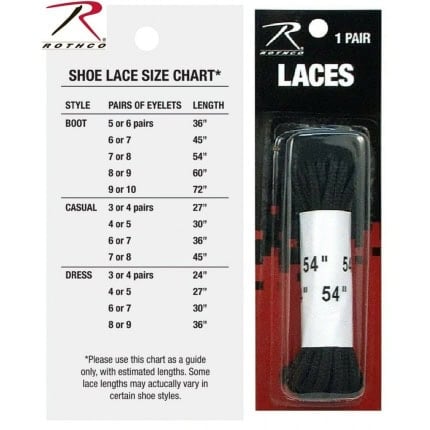
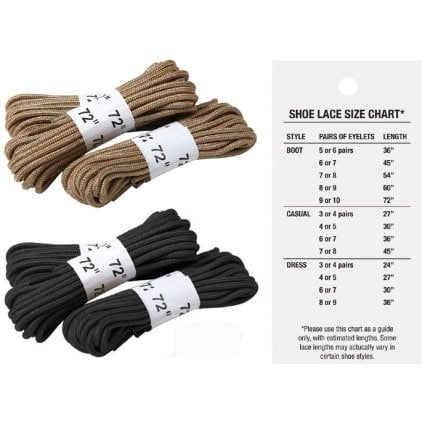
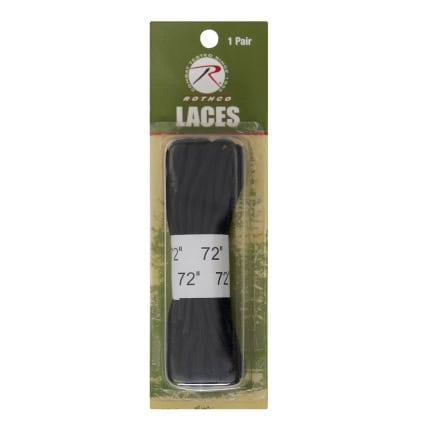
Laces wear out faster than boots. Rothco Tactical Boot Laces come in lengths of 135 and 180 cm. The more eyelets, the longer the lace you need, so measure your old one before buying to be sure. See other small items in the category footwear accessories.
In winter, road salt and drying too quickly do the most damage to leather. After walking on salted ground, wipe your boots with a damp cloth, let them dry at room temperature away from radiators, then apply leather cream or grease. Reproof them before the season and a few times during it, especially on the seams around the sole.
How to choose the size and break in new lace-up boots
Try boots on in the evening, when your feet are slightly bigger, and with the socks you'll actually wear. In winter these are often thicker socks, so bear that in mind. Your toes should have a little room at the front, and your heel shouldn't lift much when you walk with the laces done up tight.
If you're ordering online, measure your foot and compare it with the size charts. If the size isn't right, you can return or exchange within 14 days, in person in a shop or by sending a parcel.
Stiff leather needs time. For the first few days, wear the boots for an hour or two, at home or on short walks, with thicker socks. Spots that rub, usually the heel and just above it, can be softened with leather cream. Don't head straight out for a full day of walking in new boots.
You can try on the combat boots and other items from this article in our shops in Belgrade, Novi Sad and Niš; the addresses are on the page our shops. Ako naručujete putem stranice, paket stiže kurirskom službom D Express u Crnoj Gori, a detalji su na stranici delivery.
From our range

 Black
Denim Blue
 Black
 Green
 Black
FAQ
How many eyelets should I get for my first combat boots?
To start with, we recommend 10 eyelets. They're easy to put on, go with jeans, cargo and straight trousers, and can be worn every day without much thought.
Should I get my usual size or a size up?
Try them on with the socks you will wear, ideally in the evening. Your toes should have a little room and your heel should not slip as you walk. If you order online, compare your foot length with the size charts.
How do I stop combat boots rubbing in the first few days?
Wear them for short periods around the house or on short walks, with thicker socks, and apply leather cream where they rub. The leather gradually adapts to your foot.
Can I wear lace-up boots in snow and salt?
You can, but afterwards wipe them with a damp cloth, dry them at room temperature away from the radiator and look after them regularly with cream or waterproofing. Salt dries out leather if it isn't cleaned off.
What length laces do I need?
It depends on the number of eyelets. Rothco laces come in 135 and 180 cm lengths, and the safest option is to measure your old laces before buying.







 Patches
 Dog tags
 Balaclavas and neck gaiters
 Belts, braces and duty belts
 Hats, caps and wide-brim hats
 Scarves
 Sunglasses
 Wallets
 Gloves
 Zippo Lighters and Zippo Accessories
 Jackets
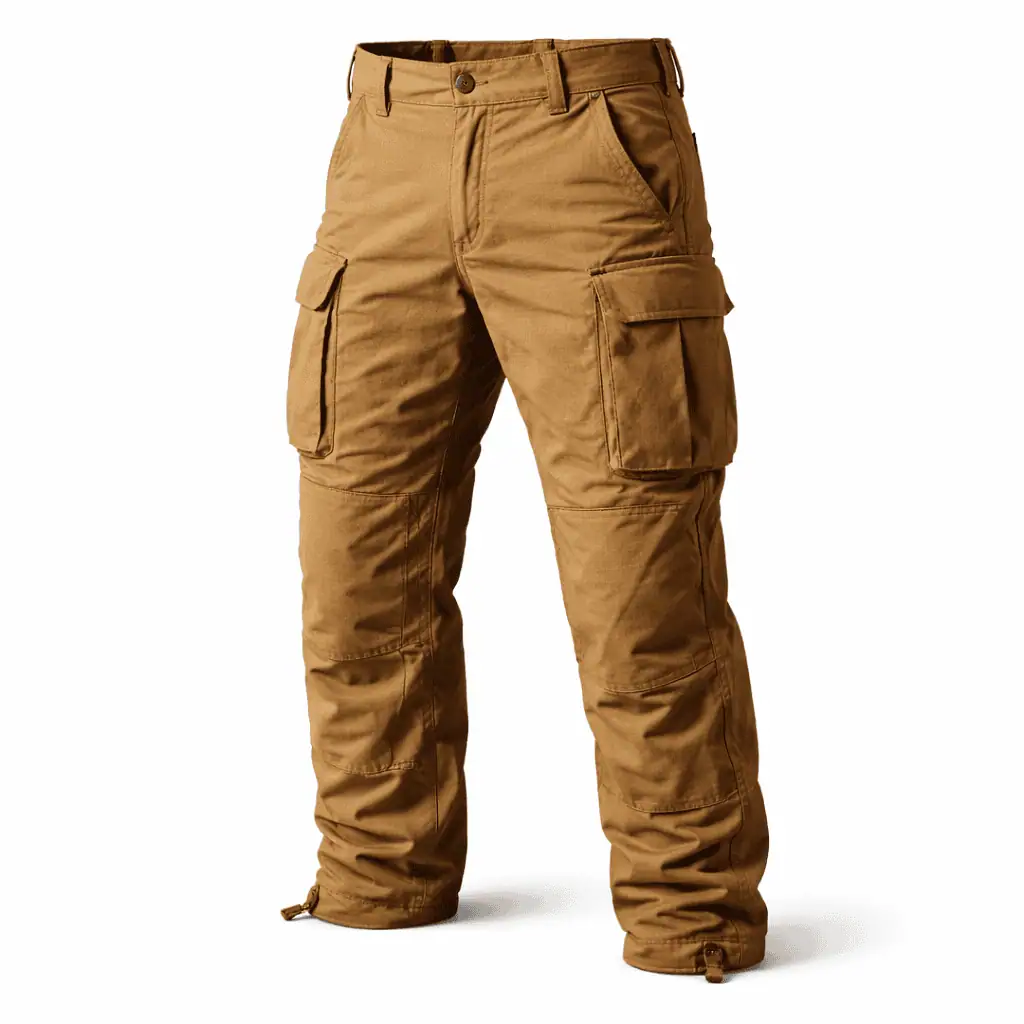 Trousers
 Sweatshirts
 T-shirts
 Shirts
 Shorts
 Windbreakers
 Vests
 Boots
 Shoes
 Trainers
 Footwear accessories
 Backpacks
 Bags
 Pouches
 Torches
 Pepper Sprays and Tear Gas
 Binoculars and compasses
 Knives, Tools and Batons
 Slingshots
 Other Gear